
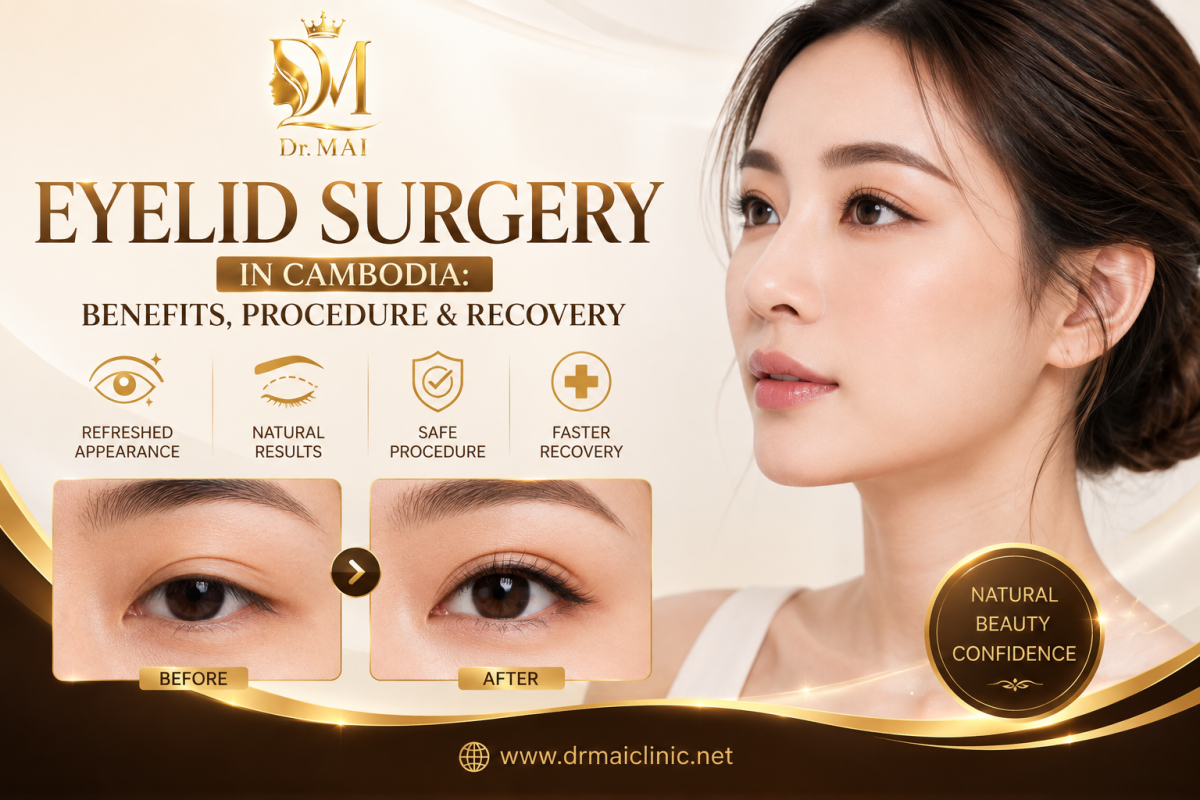
Beautiful eyes can have a significant impact on the overall appearance of the face. For people who feel that droopy eyelids, excess skin, or under-eye bags make them look tired or older, eyelid surgery in Cambodia may be an option to consider.
Also known as blepharoplasty, eyelid surgery is a cosmetic procedure designed to improve the appearance of the upper eyelids, lower eyelids, or both. In some cases, removing excess upper-eyelid skin may also improve part of the peripheral visual field when the skin is obstructing vision.
For patients considering cosmetic surgery in Phnom Penh, understanding the benefits, procedure, recovery process, and potential risks is an important part of making an informed decision.
What Is Eyelid Surgery?
Eyelid surgery, or blepharoplasty, is a surgical procedure that removes or reshapes excess skin, muscle, and/or fat around the eyelids.
Depending on the patient’s anatomy and goals, treatment may focus on:
- Upper eyelid excess skin
- Droopy or heavy-looking upper eyelids
- Lower eyelid bags
- Excess skin beneath the eyes
- Asymmetry between the eyelids
- A tired or aged appearance around the eyes
The procedure is highly individualized. Not every patient needs the same amount of tissue removal or the same surgical approach.
For this reason, a proper consultation with a qualified medical professional is essential before deciding whether eyelid surgery is appropriate.
Benefits of Eyelid Surgery in Cambodia
One of the main reasons people consider eyelid surgery in Cambodia is to achieve a more refreshed and balanced appearance.
1. A More Awake and Refreshed Appearance
Excess skin or fat around the eyes can contribute to a tired-looking appearance. Carefully planned eyelid surgery may help create a more open and refreshed appearance while maintaining the patient’s natural facial characteristics.
2. Reduction of Excess Eyelid Skin
With age, the skin around the eyes can lose elasticity, resulting in sagging or hooded eyelids. Blepharoplasty can address excess skin when clinically appropriate.
3. Improvement of Under-Eye Bags
Lower blepharoplasty may be used to address certain types of under-eye bags caused by excess or displaced fat and skin. The appropriate technique depends on the underlying anatomy.
4. Potential Improvement in Peripheral Vision
For some patients, significant excess upper-eyelid skin can interfere with the upper or outer portions of peripheral vision. In these cases, eyelid surgery may help reduce the obstruction.
It is important to distinguish medically indicated functional improvement from cosmetic enhancement. A medical assessment is necessary to determine whether surgery may provide a visual benefit.
How Is Eyelid Surgery Performed?
The exact procedure depends on whether the patient requires upper eyelid surgery, lower eyelid surgery, or a combination of both.
Step 1: Consultation and Assessment
Before surgery, the doctor should evaluate the patient’s eyelid anatomy, facial proportions, medical history, expectations, and any existing eye conditions.
Patients should discuss conditions such as dry eyes, glaucoma, allergies, thyroid problems, diabetes, previous eye surgery, and medications with their medical provider.
Step 2: Personalized Surgical Planning
For upper eyelid surgery, the incision is commonly placed within the natural eyelid crease. Excess skin and, when appropriate, underlying tissue may then be addressed.
For lower eyelid surgery, the incision and technique depend on the patient’s anatomy and whether the primary concern is excess skin, fat, or both.
The objective should be appropriate correction rather than excessive tissue removal.
Step 3: Surgery and Immediate Recovery
Blepharoplasty is commonly performed as an outpatient procedure, meaning many patients can return home the same day after appropriate monitoring. Anesthesia or sedation is selected according to the procedure and the patient’s circumstances.
Eyelid Surgery Recovery
Recovery after eyelid surgery in Cambodia varies from person to person.
Swelling, bruising, mild discomfort, irritation, temporary dryness, and sensitivity around the eyes can occur during the early healing period.
Your surgeon may recommend:
- Applying cool compresses as instructed
- Keeping the head elevated while resting
- Using prescribed eye drops or ointments
- Avoiding strenuous activity during the early recovery period
- Protecting the eyes from excessive sunlight
- Avoiding rubbing or putting unnecessary pressure on the eyes
- Attending scheduled follow-up appointments
Mayo Clinic notes that bruising and swelling commonly decrease gradually over approximately 10–14 days, while scars can continue to fade over several months.
However, individual recovery can differ, so patients should follow the postoperative instructions provided by their surgical team rather than relying on a fixed timeline.
Is Eyelid Surgery Safe?
Like any surgical procedure, blepharoplasty has potential risks. These may include bleeding, infection, dry or irritated eyes, difficulty closing the eyes, noticeable scarring, temporary blurred vision, eyelid problems, and, rarely, more serious eye-related complications.
This is why choosing a qualified surgeon, appropriate medical facility, and structured postoperative follow-up is an important part of the decision-making process.
Patients should also have realistic expectations. Eyelid surgery can improve specific aesthetic concerns, but it cannot stop the natural aging process or guarantee a particular appearance.
Why Choose Dr Mai Clinic for Eyelid Surgery in Phnom Penh?
For patients researching eyelid surgery in Cambodia, selecting a clinic should involve more than comparing prices.
At Dr Mai Clinic, patients can discuss their aesthetic goals and receive an individualized assessment of their eyelid characteristics and facial proportions.
A personalized approach is particularly important around the eyes because even relatively small changes can affect facial expression and overall appearance.
Before proceeding with surgery, patients should ask about the surgeon’s qualifications and experience, the recommended technique, expected recovery, potential risks, and postoperative care.
Frequently Asked Questions
How long does eyelid surgery take?
The duration depends on whether upper eyelid, lower eyelid, or combined surgery is performed. The complexity of the case can also affect operating time.
How long is recovery after eyelid surgery?
Many patients experience noticeable swelling and bruising during the first one to two weeks, with further healing continuing afterward. Individual recovery varies.
Will eyelid surgery leave scars?
Incisions are generally positioned in natural eyelid creases or other carefully selected areas. Scars can take months to mature and fade, and their appearance varies between individuals.
Can eyelid surgery make the eyes look bigger?
It may create a more open or refreshed appearance when excess eyelid skin is contributing to a heavy-looking eye area. However, the result depends on individual anatomy and should be planned conservatively.
How much does eyelid surgery cost in Cambodia?
The cost varies according to the surgical technique, complexity, surgeon, facility, and whether additional procedures are required. A personalized consultation is the best way to determine the appropriate treatment and cost.
Final Thoughts
Eyelid surgery in Cambodia can be an option for people who want to address excess eyelid skin, droopy eyelids, under-eye bags, or certain functional concerns.
The key to a natural-looking result is not simply removing as much tissue as possible. Instead, treatment should be based on individual anatomy, facial balance, appropriate surgical planning, realistic expectations, and careful postoperative care.
If you are considering eyelid surgery in Phnom Penh, Dr Mai Clinic can be a starting point for discussing your goals and learning which approach may be suitable for you.
Secondary Keywords:
- Eyelid Surgery Phnom Penh
- Blepharoplasty Cambodia
- Blepharoplasty Phnom Penh
- Double Eyelid Surgery Cambodia
- Upper Eyelid Surgery Cambodia
- Lower Eyelid Surgery Cambodia
- Cosmetic Surgery Phnom Penh
- Dr Mai Clinic
